
Authority is something I create
White Elephant by Jeyamohan

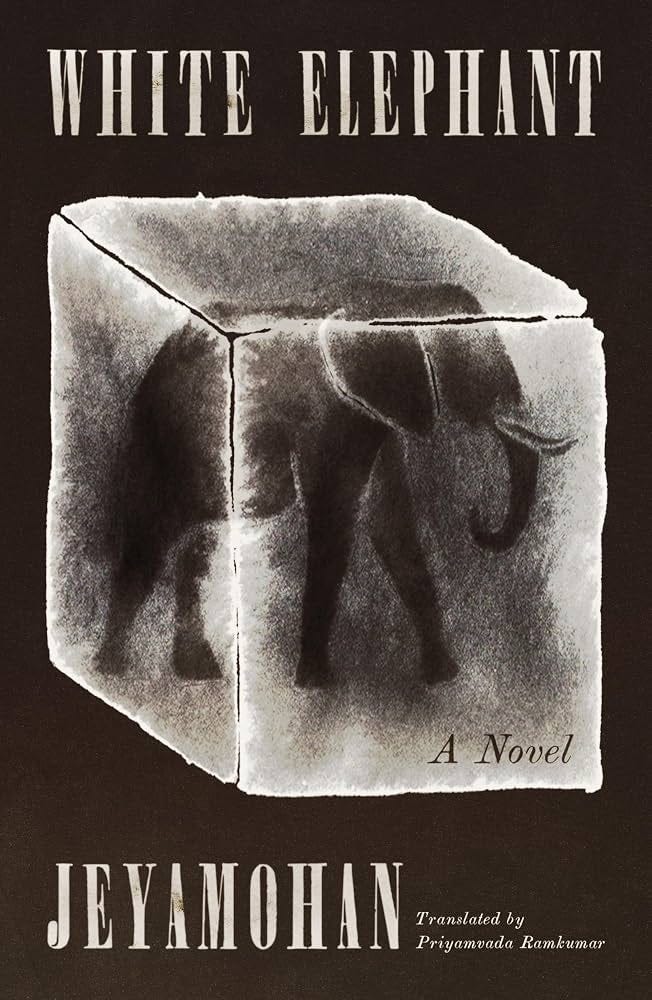
The Tamil writer Jeyamohan has appeared in English over the past few years from translators Priyamvada Ramkumar and Suchitra. White Elephant (FSG) and The Abyss (Transit Books), translated by each respectively, depict characters who profit off of the underclass. These novels expose buried and current atrocities in India, tracing a genealogy of the systems and psychologies that sustain them.
White Elephant follows Aiden Byrne, an Irish policeman posted to Madraspatnam in 1878, who is caught between the alienated power of his position and his own ill-defined morals. An ice factory and its ties to the Great Famine of 1876-1878 are the stage in which Jeyamohan explores the hypocrisies of colonial rule and capitalist exploitation. White Elephant is a postcolonial novel in the tradition of its greatest exemplars, recalling the sweep and horror of Yambo Ouologuem’s Bound to Violence, tempered with the knife-like wit of Tayeb Salih’s Season of Migration to the North. As in Wide Sargasso Sea, it is a novel wherein whiteness is sublimated by a colonial society that simultaneously upholds and negates it.
“To feel superior through the act of humiliating those below us is what we are taught formally and systematically…. ‘We are white’—that’s the very first sentence we are told in our training, a sentence that is repeated tens of thousands of time afterwards. Before long, it blends with our breaths, and runs without end on the inside.” (100).
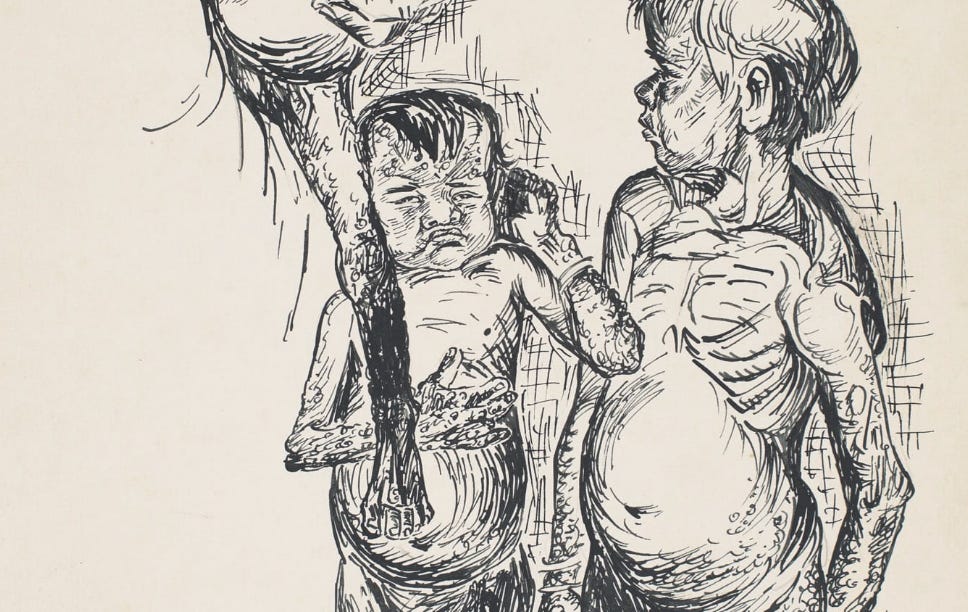
Aiden is exemplary of how power outranks the individual’s sense of historical/ethnic responsibility, as he lives in guilt for serving the British Empire against his Irish father’s wishes and pursues justice for his own vanity. After a haunting sequence in which Aiden discovers the famine, witnessing piles of corpses being eaten by dogs, he daydreams about his potential to write a historical document about it. Faced with unfathomable suffering, Aiden finds that words and justice through official means are not enough to save anyone.
“He apprehended the true meaning of the famine the moment he set eyes upon it. I, on the other hand, am kicking it around with my words. I manoeuvre it this way and that, to bring it to a place that suits me. Was this why Man created letters and numbers? To alienate himself conveniently from the life that swells right in front of his eyes, to create a private world inside them and dwell there?… Stop the export of grains from Madraspatnam, Nagapatnam, and Vizagapatnam, and the famine will end within a week… Those grains feed the British armies fighting in desert lands, in ice fields, in dense jungles, to conquer the world. Can he halt the British Empire that spreads like grass fire?” (183-184).
White Elephant is a masterclass of novel writing, prose perfectly pitched to each moment, whether it be feverish stream of consciousness or abrupt administrative dialogue. It is the best evidence so far for Jeyamohan’s stature in Tamil literature, followed closely by The Abyss, which is an excellent sister text in its ideas and form. White Elephant also appears this year alongside Megha Majumdar’s sophomore novel, A Guardian and a Thief. Majumdar’s is another novel of famine in India, but one occurring in the near future. The Great Famine of 1876-1878 is mentioned in the early pages of A Guardian and a Thief, linking famines as a historical consequence of colonial and capitalist exploitation. One reads White Elephant with the knowledge that these cycles of exploitation and empire persist, with the same people victimized, and we cannot rely on those in power to change things for the better.
really enjoyed this read!